 By Kelvin Tshuma
You bought the white t-shirt everyone recommended. Three washes later, the collar is bacon. The seams twist. The fabric is see-through. You paid $35 for something that looks worse than a $6 shirt from a discount bin. This is not a laundry problem. This is a buying problem.
Most wardrobe essentials lists are written by people who have never worn the clothes for more than a photo shoot. They recommend based on aesthetics, not durability. They ignore fabric weight, stitch density, and fiber length. The result: you spend money on basics that fail fast, then buy replacements, then repeat the cycle.
This article is not another list of “10 items every woman needs.” It is a failure-mode breakdown. Here is what actually goes wrong with common wardrobe essentials, and what to buy instead.
Why Most “Quality Basics” Are Actually Cheap Clothes With Good Marketing
Before naming specific products, you need to understand one thing: fabric weight and fiber length matter more than brand name. A $120 t-shirt from a luxury label can pill in two washes if it is made from short-staple cotton. A $25 t-shirt from Uniqlo can last five years if the fabric is dense and the stitching is reinforced.
Here is what actually determines whether a basic survives:
- Fiber length: Long-staple cotton (Pima, Supima, Egyptian) resists pilling because the fibers are longer and twist together more tightly. Short-staple cotton pills quickly. This is the single biggest predictor of t-shirt longevity.
- Fabric weight: Measured in GSM (grams per square meter). Anything under 160 GSM is thin, prone to holes, and see-through. 180-220 GSM is the sweet spot for t-shirts. Under 140 GSM is basically disposable.
- Stitch density: Look at the seams. Cheap shirts have 6-8 stitches per inch. Quality shirts have 10-14. More stitches per inch means the seam holds under stress.
- Fiber content: 100% cotton is not always better. A 95% cotton / 5% elastane blend holds its shape better for fitted basics. 100% merino wool regulates temperature but requires careful washing.
If you remember nothing else: check the GSM before you buy a t-shirt. Most brands do not list it. If they do not, that is a signal. Uniqlo lists fabric weight for their supima cotton tees. Everlane lists it for their organic cotton line. Brands that hide fabric weight are usually selling thin fabric.
The White T-Shirt Problem: Why Yours Goes Bacon-Collar After Three Washes
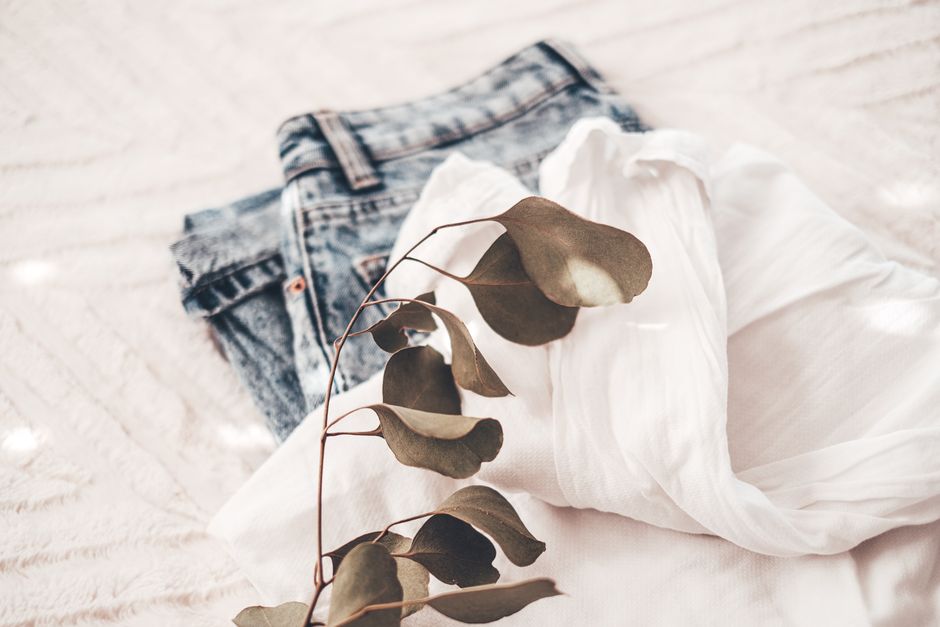
The white t-shirt is the most-recommended wardrobe essential and the most common failure point. The bacon collar happens because the ribbing at the neck is made from a different, cheaper fabric than the body. When washed and dried, the two fabrics shrink at different rates, and the collar ripples permanently.
Here are the three white t-shirts that actually hold up, based on fabric weight and construction:
| Brand & Model | Fabric | Weight | Price | Why It Survives |
|---|---|---|---|---|
| Uniqlo Supima Cotton Crew Neck | 100% Supima cotton | ~190 GSM | $19.90 | Long-staple cotton resists pilling; ribbed collar is double-stitched |
| Everlane Organic Cotton Box-Cut Tee | 100% organic cotton | ~200 GSM | $35 | Heavyweight fabric; reinforced shoulder seams |
| LL Bean Pima Cotton Crewneck | 100% Pima cotton | ~210 GSM | $29.95 | Dense knit; pre-shrunk; collar holds shape after 50+ washes |
My pick for most people: the Uniqlo Supima Cotton Crew Neck at $19.90. It is not the thickest, but it has the best price-to-durability ratio. The collar uses a separate ribbed fabric that is pre-shrunk, which prevents the bacon effect. Wash cold, hang dry, and it stays flat for years.
What to Avoid
Any white t-shirt under $10 from a fast-fashion retailer. The fabric is almost always under 140 GSM, which means it is see-through and develops holes at the belt line within six months. Also avoid anything labeled “slub cotton” for a basic white tee. Slub texture comes from uneven yarn, which looks interesting but creates weak points in the fabric.
The Jeans That Sag at the Knees: Fabric Content Is the Hidden Filter
Stretch jeans are comfortable for the first month. Then the knees bag out, the waistband stretches, and they never recover. The culprit is elastane content above 2%. Elastane breaks down with heat and repeated wear. Once it loses elasticity, the jeans do not snap back.
For jeans that hold their shape, look for:
- 98-99% cotton, 1-2% elastane — enough stretch for comfort, not enough to lose shape
- 100% cotton rigid denim — no stretch, but breaks in to your body and lasts decades
- Selvedge denim — woven on shuttle looms, denser fabric, slower to wear out
Specific picks: Levi’s 501 Original Fit ($79.50) in 100% cotton is the reference standard. Everlane The ’90s Cheeky Jean ($98) uses 98% organic cotton / 2% elastane and the knees hold shape noticeably better than cheaper stretch jeans. Uniqlo Selvedge Regular Fit Jeans ($49.90) are the cheapest entry point into selvedge denim that actually lasts.
The tradeoff: rigid denim is uncomfortable for the first week. You have to break it in. If you want stretch, stay at 2% elastane maximum. Anything above 3% is a legging pretending to be a jean, and it will fail at the knees within a year.
Merino Wool Sweaters: The $150 Mistake You Keep Making
Merino wool is the best fabric for a year-round sweater. It regulates temperature, resists odor, and drapes well. But most merino sweaters on the market are made from low-grade merino with a short fiber length, and they develop holes at the elbows within two seasons.
The spec that matters here is micron count. Fine merino is 17.5-19.5 microns. Coarse merino is 21-24 microns. Fine merino is softer and more durable because the fibers are longer and stronger when spun. Coarse merino feels scratchy and pills faster.
Specific picks that hold up:
- Patagonia Better Sweater ($139) — not merino, it is fleece, but it is the most durable mid-layer you can buy. Pills minimally after years of wear.
- Uniqlo Extra Fine Merino Crew Neck ($39.90) — 19.5 micron merino, surprisingly durable for the price. Wash on cold, lay flat to dry.
- Everlane The Cashmere Crew ($148) — Grade-A cashmere from Inner Mongolia, 2-ply construction means fewer holes than cheap 1-ply cashmere.
The failure mode: buying a $50 merino sweater from a fast-fashion brand. That merino is almost certainly 21+ microns, spun from short fibers, and will pill into a fuzzy mess within a month. If you cannot afford fine merino, buy the Uniqlo Extra Fine at $39.90. It is the only sub-$50 merino sweater I have seen survive more than two winters.
The Blazer That Looks Cheap After One Season
A blazer is the most expensive wardrobe essential you will buy, and the one where cheap construction shows fastest. The failure points: lapel roll, shoulder padding, lining fabric, and button quality. A cheap blazer has a fused lapel (glued, not stitched), which bubbles after dry cleaning. A quality blazer has a floating canvas lapel that rolls naturally and survives decades.
Here is the quick test: pinch the lapel. If it feels flat and stiff, it is fused. If you can feel a layer of fabric between the outer shell and the lining, it is canvassed. Canvassed blazers cost more but last 10-20 years with proper care. Fused blazers look good for about six months.
Specific picks at different price points:
- Uniqlo Comfort Jacket ($79.90) — fused, but the fabric is a stretch knit that resists wrinkling. Best for travel or casual wear. Not a forever piece.
- Everlane The Oversized Blazer ($168) — half-canvassed, wool-blend fabric, decent lapel roll. The best value for a blazer that looks expensive.
- Brooks Brothers 1818 Blazer ($598) — full-canvas, Italian wool, classic cut. This is the buy-it-for-life option. On sale, it drops to $350-400.
If you wear a blazer once a month, the Everlane at $168 is enough. If you wear one weekly for work, save up for the Brooks Brothers. The cost per wear on a $598 blazer worn 100 times a year is $5.98. The cost per wear on a $79.90 blazer that falls apart after 30 wears is $2.66 — but you look worse every time you wear it.
When NOT to Buy “Wardrobe Essentials” at All
Here is the uncomfortable truth: most people do not need a wardrobe essentials list. They need to stop buying clothes. The entire concept of “essentials” is a marketing framework designed to make you feel like you are missing something. You are not.
If you already own a white t-shirt that fits, you do not need a better white t-shirt. Wear it until it fails, then replace it with one of the options above. The most sustainable wardrobe is the one you already own.
Do not buy a blazer if you work from home. Do not buy merino sweaters if you live in Miami. Do not buy selvedge denim if you hate stiff jeans. Every “essential” is only essential in a specific context. Strip away the context, and you are just buying clothes you will not wear.
The real wardrobe essential is a simple rule: buy fewer, better things, and only when the old thing actually fails.
Quick Verdict: What to Buy and What to Skip
The table below summarizes the recommendations. This is not a complete wardrobe. It is a repair kit for the basics that fail most often.
| Item | Best Pick | Price | Skip If |
|---|---|---|---|
| White t-shirt | Uniqlo Supima Cotton Crew Neck | $19.90 | You already own one that fits |
| Jeans | Levi’s 501 Original Fit (100% cotton) | $79.50 | You need stretch for daily comfort |
| Sweater | Uniqlo Extra Fine Merino Crew Neck | $39.90 | You live in a warm climate |
| Blazer | Everlane The Oversized Blazer | $168 | You wear one less than once a month |
The pattern across all these picks: fabric weight and fiber length matter more than brand prestige. A $19.90 Uniqlo t-shirt outperforms a $120 designer t-shirt if the fabric is denser and the stitching is tighter. Learn to read fabric specs, not marketing copy. That is the actual wardrobe essential.