 By Kelvin Tshuma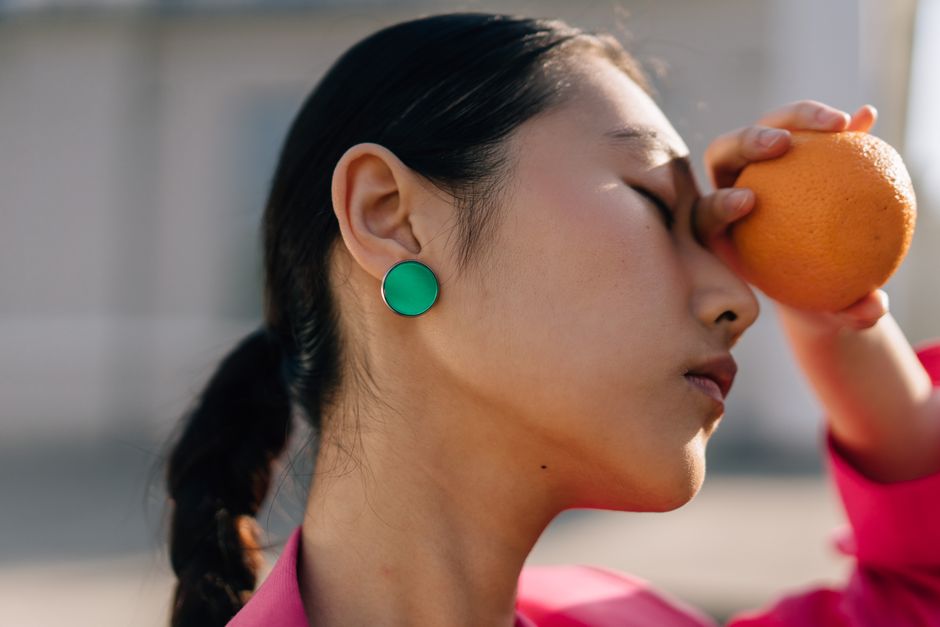
A 2-inch drop earring gives the eye twice the vertical length of a 1-inch drop, but that extra length does not always make it a better choice. A thick turtleneck collar, shoulder-length hair, scarf, and coat lapel can swallow a dramatic earring before anyone sees its shape. The controlling rule is simple: the earring must create a clean visual gap beside the face, not compete with every layer near the neck. This guide applies that rule to shape, length, weight, color, hair, and daily comfort, with specific examples for 2026 shoppers. This is not legal advice — consult a licensed attorney.
Which Earring Shape Clears a Turtleneck Collar?
The table below gives a practical starting point. Measurements refer to the visible length or outside diameter of the earring, not the post or clasp.
| Earring shape | Useful size | Best turtleneck pairing | Main risk |
|---|---|---|---|
| Huggie hoop | 12–18 mm | Fine-knit or fitted black turtlenecks | Can look too small with bulky knits |
| Medium hoop | 25–40 mm | Mock necks and smooth wool sweaters | Hair can cover the lower edge |
| Geometric drop | 35–55 mm | High collars and pulled-back hair | May catch on scarves |
| Beaded chandelier | 50–75 mm | Simple, solid-color turtlenecks | Too much movement near thick fabric |
| Stud cluster | 10–20 mm total width | Patterned sweaters and layered scarves | Lacks vertical separation |
The strongest shape for most wardrobes
A medium hoop is the most reliable starting point because its continuous line remains readable from several angles. The Mejuri Croissant Dome Hoops, for example, use a rounded, substantial profile that works with a slim black turtleneck and does not depend on a long drop. Choose a version around 18–25 mm when your hair is down, or move toward 30–40 mm when the hair is tucked behind the ears.
When a long drop earns its space
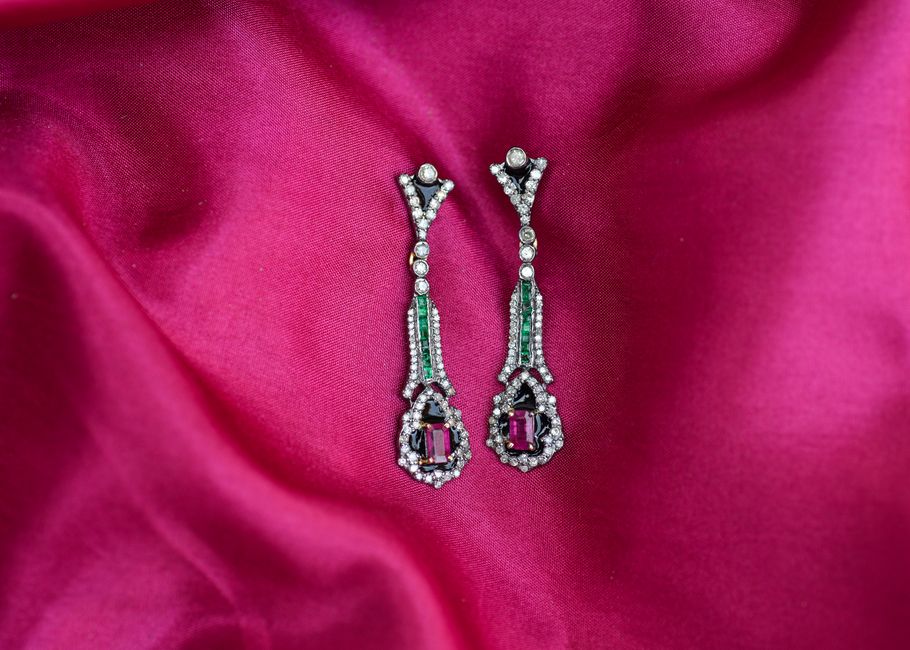
A long drop wins when the collar is plain, the hair is controlled, and the earring has a firm shape. The Kendra Scott Danielle Drop Earrings are a useful reference point because their elongated stone design creates a clear vertical line. A similar 1.5–2-inch drop is enough for most office outfits. A 3-inch chandelier usually needs a bare neckline or a very simple sweater to avoid looking crowded.
How Should You Measure Earrings for a High Neck?
Use this five-part test before buying. It takes less than a minute and prevents the most common mistake: judging an earring against an open-neck display card instead of against the winter clothes you actually wear.
- Measure the collar height. Put on the turtleneck and measure from the bottom of the earlobe to the highest point of the fabric near the jaw. If the collar reaches the earlobe, favor a hoop or an upper-ear silhouette. If it sits 1 inch below the earlobe, a 1.5–2-inch drop can create a clean gap.
- Check the shoulder line. A wide shoulder seam or padded coat makes a small earring look even smaller. With broad outerwear, choose more width or stronger color rather than adding excessive length.
- Test the hair boundary. Let your hair fall naturally. If it covers the lower half of the earring, the piece needs either a brighter finish, a wider shape, or a shorter drop that sits beside the hair instead of behind it.
- Apply the movement test. Turn your head, put on a scarf, and lift your coat collar. Earrings that snag, tap the fabric, or swing into the scarf are poor winter choices, even if they look excellent in a mirror.
- Check the weight before committing. A statement earring should not pull the lobe downward. For long wear, lightweight acrylic, hollow metal, resin, or fabric-covered designs are usually safer than solid metal pieces of the same size.
The clearest buying threshold is this: if the earring vanishes when you add your coat, it is not functioning as a statement piece. If it touches the turtleneck every time you turn, it is too long or too active for that outfit.
How Do Hair and Winter Layers Change the Result?

Hair is the hidden variable that causes most styling advice to fail. A gold drop may look visible with a sleek bun and disappear entirely beneath a shoulder-length bob. The same pair can also look too busy when loose curls, a ribbed sweater, and a textured scarf all occupy the same small area. The correct judgment must account for the full winter frame: hair, collar, scarf, coat, and the earring itself.
Match the earring to the hair boundary
With a low bun, ponytail, or short haircut, vertical earrings have room to work. A 2-inch drop can create a deliberate line from the earlobe toward the shoulder. With thick or long hair, width becomes more useful than length. A 30–40 mm hoop, a wide oval, or a bright sculptural stud can remain visible without hanging into the sweater. BaubleBar Blanca Statement Earrings are a good style reference for this approach: a broad, colorful silhouette can hold its shape beside loose hair, while a narrow silver thread may disappear.
Control the number of competing textures
Winter clothing already supplies texture through wool, ribbing, fleece, leather, and brushed metal hardware. The outfit needs one dominant accessory story. If the turtleneck is cable-knit, choose smooth enamel, polished metal, or a clean acrylic form. If the sweater is smooth cashmere, a beaded or hammered finish can add interest. Do not stack a large scarf, a crystal chandelier, a textured headband, and a highly patterned sweater and expect the earring to remain the focal point.
Color also changes perceived size. Bright red, cobalt, emerald, and clear crystal usually appear more prominent than matte beige or dull silver at the same measurement. J.Crew Crystal-Embellished Drop Earrings can therefore read as larger than a plain metal pair with the same length. For a professional setting, choose one strong color or reflective finish and keep the rest of the outfit quiet.
The best winter formula is not maximum decoration. It is one visible earring shape, one controlled hair boundary, and one layer near the face that stays simple.
Can Statement Earrings Stay Comfortable All Day?
What makes a statement earring wearable?
Comfort is a construction issue, not a matter of personal toughness. A large earring can feel light when it uses hollow metal, resin, acrylic, or fabric, while a smaller solid-metal design can pull continuously on the lobe. Look for a secure back, a smooth edge, and a post positioned close to the center of the piece. If the design swings far below the post, the leverage increases and the earring may feel heavier than its listed weight suggests.
When should you choose a hoop instead of a drop?
Choose a hoop when you wear scarves, headphones, or high coat collars. Hoops keep their center of gravity near the ear and usually create less downward pull. The Mejuri Croissant Dome Hoops are a useful model for an understated statement: their rounded volume adds presence without reaching into the scarf zone. Choose a drop when the coat is open, the hair is controlled, and you want the face to look longer.
What winter-specific failures should buyers avoid?
First, avoid rough backs and sharp corners that can catch on knitwear. Second, avoid earrings with loose chains if you will wear a scarf every day. Third, avoid buying by photograph alone; many online images use bare shoulders and pinned-back hair. Finally, inspect the clasp. A pair that opens when the scarf brushes it is not a practical winter accessory, regardless of its appearance.
For an office day, travel day, or long event, the clear recommendation is a lightweight hoop or a structured drop under 2 inches. Save heavier chandelier designs for shorter wear and simpler layers.
Which Earrings Should You Buy—and Which Should You Skip?

My strongest recommendation is a 30–40 mm medium hoop in a bright metal or enamel finish. It gives enough scale to clear a turtleneck, stays easier to wear with scarves, and works with both loose hair and a pulled-back style. For a more polished look, choose a rounded gold hoop such as the Mejuri Croissant Dome Hoops. For color, choose a broad BaubleBar statement design. For a longer face-framing line, choose the Kendra Scott Danielle Drop Earrings in a length near 1.5–2 inches.
Skip earrings that fail one of three tests: they disappear behind your hair, collide with the collar, or pull the lobe after ten minutes. Also skip a very long chandelier when your winter uniform already includes a thick scarf and a high coat collar. The accessory will have no clear space, and the extra length will create movement without improving the outfit.
Do not buy a statement earring solely because it photographs dramatically. A good winter piece must survive ordinary movement. Put on the turtleneck, coat, and scarf together. Check the front view, the side view, and the moment when you turn your head. If the earring remains visible, comfortable, and separate from the fabric, it has met the practical test.
The final verdict is specific: for most people who wear winter turtlenecks several times a week, buy a lightweight 30–40 mm hoop or a structured drop no longer than 2 inches. Choose the hoop for scarves and loose hair; choose the drop for pulled-back hair and a plain collar. That proportion gives statement earrings enough authority to clear the neckline without turning the entire winter outfit into a contest for attention.