 By Kelvin Tshuma

You leave home at 8:10 with fresh skin, reach the corner five minutes later, and the wind has turned your base into dry patches around your nose. Your cheeks look flushed, your eyes water, and the makeup you applied so carefully now sits on your scarf.
The fix is not a heavier foundation. That usually creates more cracking and more rubbing. The better routine uses thin layers, enough drying time, and coverage only where your face needs it.
Why Wind Makes Light Makeup Break Apart
Wind does three annoying things to makeup at once: it dries the skin surface, creates friction, and makes your eyes water. A light base can look excellent indoors and fail outside because the conditions change fast. Cold March air often has low humidity, while strong gusts keep moving that dry air across your face.
Dry skin makes every patch visible
When the surface of your skin loses water, foundation clings to tiny flakes around the nostrils, chin, and cheekbones. The problem is not always the base itself. A rushed moisturizer layer, a strong exfoliating product from the night before, or hot water in the morning can leave the skin too rough for a clean finish. Apply a small amount of moisturizer to slightly damp skin, then wait 10 to 15 minutes. If your face still feels tight, add a little more only to the dry zones.
Friction removes makeup faster than wind alone
A scarf, coat collar, gloved hand, and loose hair can all rub the same areas. The sides of the nose and lower cheeks usually fade first. Keep the base thinnest where fabric touches your face. Press makeup into the skin instead of dragging it across the surface, and leave the jawline nearly bare if your collar reaches that high.
Water changes the finish
Windy walks often cause watery eyes and a runny nose. Water breaks the smooth film that makeup needs to stay even, then wiping creates a hard edge. Blot with a tissue by pressing, never swiping. The winning principle is simple: thin layers survive movement better than thick layers. Light coverage works because it gives the wind less product to disturb.
How to Apply a Wind-Ready Base in 10 Minutes
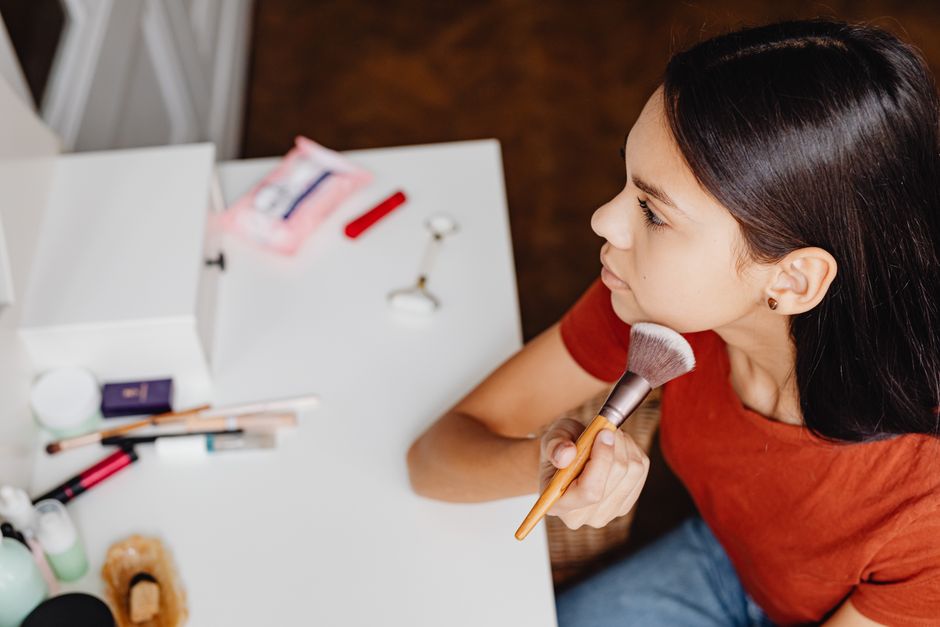
Keep the routine boring. Boring makeup lasts better because every layer has time to settle.
- Clean only what needs cleaning. Rinse with lukewarm water or use a gentle cleanser. Do not scrub dry March skin before going outside.
- Moisturize in one thin layer. Use about a pea-sized amount for the whole face. Add a second pinhead-sized amount around the nose and cheeks if those areas feel tight.
- Apply broad-spectrum SPF. Use the amount your sunscreen label recommends for the face and neck. Wait 10 minutes before adding makeup so the sunscreen film can settle. Makeup with SPF does not replace a dedicated sunscreen layer.
- Place coverage, do not paint it everywhere. Put small dots on redness around the nose, inner cheeks, chin, and any marks. Leave the forehead and outer cheeks mostly clear if the skin already looks even.
- Press with fingers or a damp sponge. Pressing fuses a thin layer to the skin. Brushing back and forth lifts moisturizer and sunscreen underneath.
- Use cream color sparingly. Tap cream blush onto the upper cheek, away from the scarf line. Keep it slightly higher than usual because rubbing near the lower cheek will erase it.
- Powder only the moving zones. Use a small brush on the sides of the nose, under the nostrils, and the center of the chin. Leave the outer cheeks alone unless they become shiny.
- Finish before you put on the scarf. Give the face two minutes to settle. Then wrap the scarf below the cheekbones when possible, leaving less fabric against the base.
Do not add layers because the mirror looks unfinished from 30 centimeters away. A windy walk is viewed at normal distance, not under bathroom lighting. The goal is an even complexion that still looks like skin.
Which Light-Coverage Bases Hold Up Best Outside?
Choose a flexible skin tint or tinted serum with a thin film and a finish that matches your skin. Dewy formulas can look fresh, but too much slip makes them move under a scarf. Soft natural or soft-matte finishes are safer for a 30-to-60-minute walk.
The best picks for a windy March walk
My pick is the Fenty Beauty Eaze Drop Skin Tint for most windy March walks. It gives enough coverage to calm redness, yet the soft natural finish does not look greasy after a few gusts. For dry skin, choose Saie Slip Tint and powder only the center of the face. For stronger redness, Tower 28 SunnyDays wins because it gives more coverage without forcing you into full foundation.
Prices can vary by retailer and shade. Treat the SPF numbers as a bonus, not your whole sun-protection plan. A separate sunscreen layer still matters, especially when March sunlight reflects off pale pavement or snow.
What to Do When Wind Ruins Your Makeup

Why does makeup separate around the nose?
Usually, the skin is too damp, too dry, or carrying too many layers. Sunscreen, primer, moisturizer, and base can form a slippery stack that never bonds. The fix is to remove one layer, wait longer, and apply less. Blot the area with tissue, press a tiny amount of base over the gap, then stop. Adding powder before the wet layer settles creates paste.
Should you powder your whole face?
No. Full-face powder is the fastest way to make light coverage look flat and dry after a cold walk. Powder only where friction and oil create problems: beside the nose, under the nostrils, the center of the chin, and the space between the brows. Leave the cheeks flexible so they can move without cracking.
When should you skip light coverage?
Skip it when your skin is peeling, stinging, or showing a fresh windburn patch. Makeup will not repair a damaged surface, and rubbing can make the discomfort worse. Use moisturizer and sunscreen, protect the face with a soft scarf or mask, and wait until the skin feels calm. Also skip a delicate sheer base for a two-hour hike in strong wind. The more time outside and the more fabric touching your face, the more useful a transfer-resistant medium-coverage base becomes.
Another common mistake is testing the finished look indoors and assuming it will stay unchanged. Walk near an open window for five minutes before leaving. If the base already gathers at the nostrils, fix it at home. Outdoor wind will not improve a weak layer.
The Final Choice: Match Coverage to the Walk
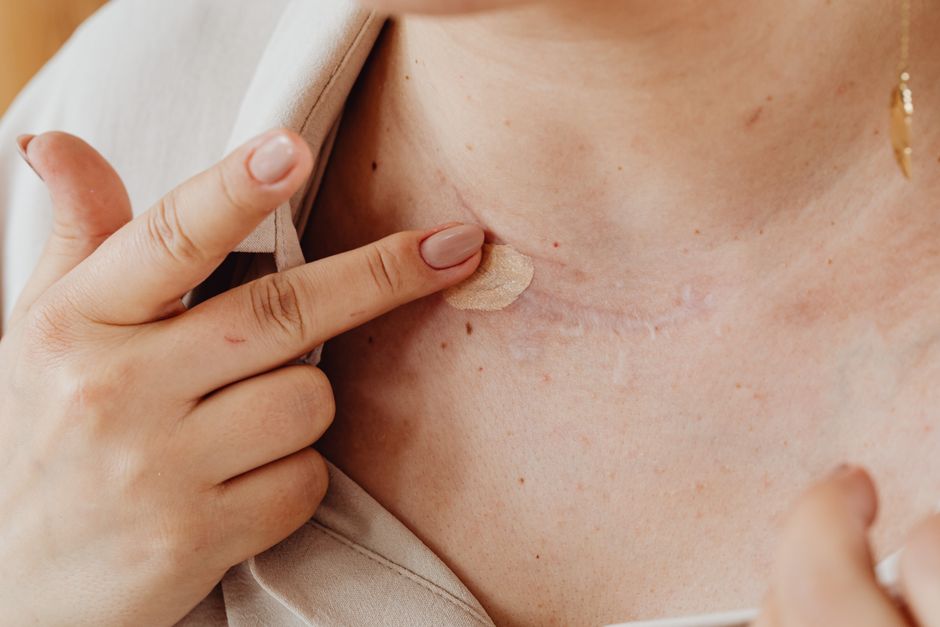
For a normal 30-to-60-minute March walk, Fenty Beauty Eaze Drop Skin Tint is the best starting point. It offers the cleanest balance of light coverage, flexible wear, and a finish that does not turn slick as soon as the weather changes. Use Saie Slip Tint when dry skin matters more than staying matte. Choose Tower 28 SunnyDays when redness needs extra help. Pick L’Oréal True Match Nude Tinted Serum when cost matters most and you are willing to apply it with a light hand.
Use less coverage in the places that rub
Keep the sides of the nose, lower cheeks, and jawline thin. Add coverage to the center of the face instead. This small change makes a bigger difference than buying a more expensive setting spray. Your scarf can remove any base, so do not place a full layer directly under it.
Use the shortest routine that works
More layers create more points of failure. If you need touch-up coverage, carry a cotton swab and a small amount of base rather than adding powder over a dry patch. First blot. Then press. Never rub.
The comparison is simple: