 By Kelvin Tshuma
Teens in the US spend an estimated $44 billion on clothing every year. A significant portion of that gets absorbed by micro-trends — aesthetics that spike for six weeks and disappear without leaving a usable wardrobe behind. The cycle is not accidental. Fast fashion retailers depend on it.
Knowing which teen fashion styles have genuine staying power versus which ones are a TikTok phase wearing a different font is the difference between a wardrobe you actually wear and a closet full of items that only made sense in February. This guide covers the six dominant aesthetics right now, how to build around them without burning through a clothing budget, and the buying patterns that guarantee regret.
The Six Teen Fashion Aesthetics That Are Actually Mainstream
Hundreds of named micro-aesthetics exist online, but most have a genuine user base of around 400 people. These six show up in real schools, on real bodies, and in real shopping carts — not just on curated Pinterest boards that twelve people follow.
| Aesthetic | Signature Pieces | Starter Budget | Longevity Estimate | Best Source | Verdict |
|---|---|---|---|---|---|
| Coquette | Bow clips, lace-trim tops, ballet flats, soft pinks and whites | $60–$150 | 2–3 years | H&M, ASOS, Brandy Melville | Strong — adapts across seasons with minor swaps |
| Y2K Revival | Low-rise jeans, cargo pants, butterfly clips, baby tees, platforms | $80–$200 | Already proven (5+ years active) | PacSun, Depop, ASOS | Buy vintage over repro — original pieces cost less and hold up better |
| Streetcore | Oversized hoodies, joggers, clean sneakers, caps | $100–$300 | Evergreen | Nike, Urban Outfitters, ASOS | Safest long-term investment of the six |
| Dark Academia | Blazers, plaid, turtlenecks, oxford shoes, earth tones | $120–$250 | 2–4 years | Zara, thrift stores, ASOS | Strongest in autumn and winter — thrift over retail |
| Clean Girl | Neutral basics, gold jewelry, slicked hair, fitted cuts | $60–$150 | 2+ years | Zara, H&M, ASOS | Best for long-term wardrobe building — transitions into adult workwear |
| Cottagecore | Floral midi dresses, cardigans, Mary Janes, linen | $80–$180 | Seasonal | Free People, ASOS, thrift | Weather-dependent — supplement another aesthetic, don’t anchor to this one |
Three of these carry more nuance than a table cell can convey. Here is what the data does not cover.
Coquette
The most visible teen aesthetic right now. Bows appear on hair clips, bag charms, shoelaces, and cardigans. Lace-trim camisoles run $20–$35 at H&M and ASOS. Ballet flats are the signature shoe — Sam Edelman’s Felicia flat ($80–$100) handles the visual job that Reformation charges $248 for. The risk with coquette is degree: the maximal version, bow on every surface and head-to-toe pastels, will date faster than a restrained interpretation. Buy the accessories cheap. Only invest in quality pieces — the flats, a well-made lace-trim blouse — if this is a long-term commitment and not a seasonal experiment.
Streetcore
Teen streetwear has shifted from pure hype-brand status toward accessible daily wear. Nike Tech Fleece sets ($120–$180 for the full set), New Balance 530s or 550s ($90–$110), oversized crewnecks, and wide-leg cargo pants define the look. Fit is the entire point here — pieces should be intentionally oversized, not accidentally baggy. There is a specific difference between a deliberately dropped shoulder and a shirt that is two sizes too large in every direction. ASOS carries a reliable range at $25–$45 per piece. Urban Outfitters skews slightly more curated at $40–$90.
Dark Academia
Blazers, plaid, turtleneck sweaters, oxford shoes. Palette runs browns, tans, burgundy, forest green, and black. Zara handles this better than most fast fashion competitors — their structured blazers run $60–$90 and maintain shape through a full school year. The honest answer for dark academia: thrift stores are the correct source. Vintage blazers at Goodwill cost $8–$25 and are made with better wool content than anything contemporary fast fashion produces at these price points. The construction quality a $90 Zara blazer attempts to replicate exists in a $15 thrift find about 40 percent of the time.
Building a Foundation Wardrobe Before Committing to Any Aesthetic
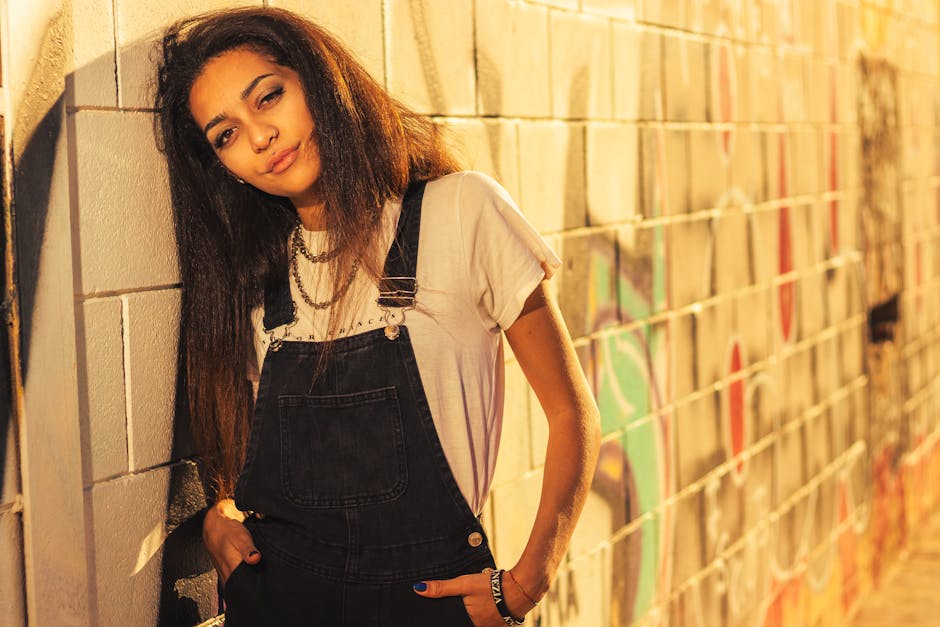
The most common teen fashion mistake is not picking the wrong aesthetic. It is picking an aesthetic before owning basics.
An aesthetic-first wardrobe means every piece is thematic. The moment the aesthetic fades or the mood shifts, nothing in the closet works together anymore. Foundation pieces are aesthetic-neutral — they exist beneath the trend layer and keep the wardrobe functional regardless of which phase you are currently in.
The Five Foundation Pieces Worth Spending Real Money On
- White tees, 2–3 units — UNIQLO’s Supima Cotton T-shirt ($15–$20) is the correct answer at this price point. The fabric holds shape and color through repeated washing in a way that $12 H&M alternatives consistently fail to do. Buy three. Replace annually.
- Dark wash straight-leg jeans — Abercrombie & Fitch’s 90s Straight Jean ($70–$80) fits a wide range of body types and sits at a cut neutral enough to cross multiple aesthetics. Levi’s 501s ($70–$90) are equally reliable. Pick based on fit preference, not brand loyalty.
- A white button-down shirt — Reads as clean girl, dark academia, coquette, or business casual depending on how it is styled. H&M sells a serviceable version for $20–$30. This is not the piece to spend $80 on at the teen stage of wardrobe building.
- One pair of versatile sneakers — New Balance 550s ($90–$110) cross streetcore and clean girl aesthetics cleanly. Converse Chuck 70s ($85–$100) work across dark academia and coquette territory. Buy based on which aesthetics you are actually gravitating toward, not which brand has more cultural cachet at a given moment.
- A structured everyday bag — Not a trend bag, not the aesthetic-specific statement piece. A simple structured tote or mini bag in black, cream, or tan. ASOS carries usable options in the $25–$50 range that photograph well and do not look cheap in person.
Total foundation cost done correctly: $300–$450. That sounds high until you compare it to the cost of three simultaneous aesthetic kits that share zero pieces in common and collectively produce nothing wearable.
When Aesthetic Pieces Actually Make Sense
Once the foundation is in place, aesthetic pieces become accents rather than load-bearing wardrobe items. Two or three coquette accessories layered over neutral basics. A dark academia blazer over a white tee and dark jeans. The aesthetic registers clearly without the wardrobe being held hostage by it.
A practical spending threshold: foundation pieces justify $40–$80 each. Trend-specific items get capped at $30. If a trend piece is priced higher than a foundation piece, skip it unless it genuinely crosses two or more aesthetics.
The Micro-Trend Problem
Micro-trends follow a predictable arc: discovery, saturation, mockery, retirement — all within roughly 90 days. Mob wife aesthetic, tomato girl summer, blueberry milk nails — these had genuine cultural moments that lasted one season at most. Spending more than $30 on any single micro-trend-specific item is almost always a poor allocation. Buy the $8 bow clip, not the $120 bow-embroidered cardigan. The clip photographs identically and costs less than a tenth of the price when the trend cycles out in March.
Where to Actually Shop for Teen Fashion
Not all retailers distribute value equally. Here is where the money goes farthest, broken down by purpose.
For Foundation and Basics
- UNIQLO — Best fabric quality-to-price ratio in mass-market retail. Supima cotton tees, ribbed knits, and their LifeWear basics ($10–$30) outlast H&M equivalents by a measurable margin. Not trend-forward, which is precisely the point for foundation pieces.
- H&M — Acceptable for basics at low price points ($10–$25). Quality has declined noticeably over recent years; best treated as a source for seasonal items expected to last one year, not a forever-wardrobe investment.
- Abercrombie & Fitch — Their denim ($70–$80) is genuinely worth the price in this category relative to alternatives. The rest of the range is inconsistent.
For Aesthetic-Specific Pieces
- ASOS — The widest range for coquette, Y2K, and clean girl pieces in the mid-market. Free returns reduce the risk of experimenting. Price range: $15–$60 per piece. Sizing varies significantly by brand on the platform; read reviews before committing.
- PacSun — Strong Y2K and streetcore selection. Their denim range ($40–$65) competes directly with higher-priced alternatives and holds up well through a school year.
- Zara — Best for dark academia and clean girl aesthetics where structure matters. Prices run $30–$90, but construction is more consistent than ASOS in structured pieces like blazers and outerwear.
The Secondhand Case
Depop and ThredUp deserve more credit than most teens give them. Original Y2K pieces from the early 2000s — actual vintage, not repro — run $10–$35 on Depop and were built to higher standards than contemporary fast fashion at any price point. For dark academia specifically, vintage blazers at thrift stores are the single best purchase available in the entire aesthetic category. The construction quality that a $90 Zara blazer attempts to replicate exists in a $12 Goodwill find — consistently enough to make the detour worthwhile.
Five Buying Mistakes That Drain a Teen Fashion Budget
Buying Multiple Aesthetics at Once
Splitting a $400 seasonal clothing budget across three aesthetics means owning 3–4 mediocre pieces from each — not enough to wear any of them cohesively. Committing to one aesthetic for 6–12 months, building real depth, then shifting is significantly more efficient. The wardrobe functions. The aesthetic reads clearly. And the next shift starts from a foundation of usable basics rather than a pile of thematic fragments that coordinate with nothing.
Paying the Brand Premium on Non-Visible Items
Premium branded streetwear hoodies run $60–$80. An equivalent construction and weight from a mid-range retailer runs $20–$35. That brand logo adds real value when it is visible and relevant to the aesthetic. It adds nothing when it is under a jacket, in a gym bag, or worn in a context where the branding is irrelevant. Buy branded pieces when the logo is part of the look. Do not pay the premium for a label no one will see.
Buying for the Photo, Not the Wear
Some purchases exist for content. That is a legitimate reason to buy something — but be clear about it going in. A $55 aesthetic piece worn twice has a cost-per-wear of $27.50. The same $55 spent on a quality foundation basic worn 80 times is $0.69. Neither choice is wrong. Buying for content and expecting wardrobe utility from it leads to a specific kind of budget regret that compounds quickly across seasons.
Ignoring Fit in Favor of the Trend
A well-fitting $25 piece almost always looks better than a poorly-fitting $90 piece. Every major teen aesthetic requires a specific silhouette — coquette is fitted through the torso, streetcore is intentionally oversized, dark academia is structured and tailored. Getting the silhouette right matters more than getting the exact brand or item. If something does not fit the way the aesthetic requires, it will not look the way it does on the reference image. Price does not fix fit.
Treating Accessories as Optional
Accessories carry more aesthetic weight per dollar than clothing in most teen fashion styles. Bow clips and lace details shift an outfit toward coquette more clearly than an aesthetic-specific dress costing five times as much. Simple gold hoops do heavy lifting for the clean girl look. Chunky chain necklaces read immediately as streetcore. The clothing is the canvas; accessories signal the aesthetic. Underinvesting in them while overspending on clothing is a consistently inefficient way to allocate a fashion budget.
This article reflects current retail pricing as of 2026 and does not constitute personal financial advice.