 By Kelvin Tshuma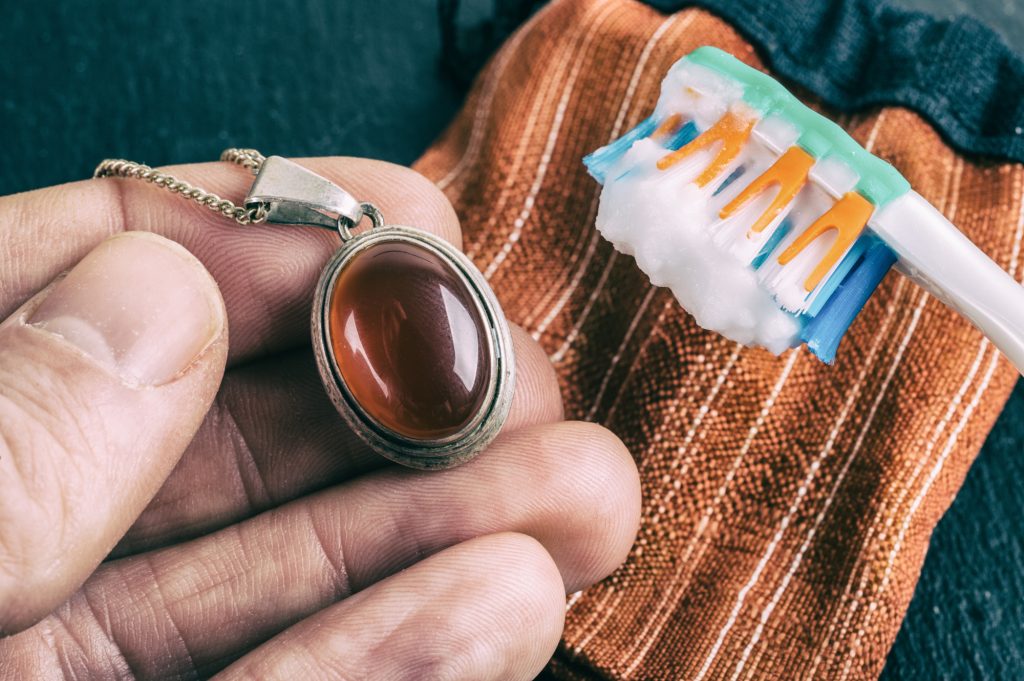
I spent three years ruining jewelry before I figured out what I was doing wrong. Toothpaste scratches gold. Baking soda etches soft stones. And that ‘dip’ cleaner? It stripped the rhodium off my white gold engagement ring and cost me $90 to re-plate.
Most cleaning advice online is written by people who have never actually damaged a piece they loved. I have. Six pieces, to be exact. Two went to the jeweler for repairs. One was a total loss — an opal pendant that cracked because I left it in an ultrasonic bath too long.
This guide covers what I learned the hard way. No fluff. No affiliate links. Just methods that work, products I actually use, and the mistakes I wish someone had warned me about.
What Actually Destroys Your Jewelry (And What Doesn’t)
Let me kill the biggest myth first: toothpaste is not a jewelry cleaner. It’s an abrasive. Toothpaste contains silica, which is harder than gold and silver. You’re essentially sanding your ring every time you scrub it. I saw a 14k yellow gold band lose its polish after just four toothpaste cleanings. The surface went from shiny to matte, and no amount of buffing brought it back.
Here’s what I’ve learned the hard way about common household ‘cleaners’:
- Baking soda paste — fine for silver, but only if you rinse immediately. Left on for more than 30 seconds, it starts reacting with copper alloys in sterling and leaves a pink tint. I have a Tiffany & Co. bracelet that still has a faint rosy patch from a 2-minute baking soda soak.
- Vinegar — safe for gold, but it eats pearls, opals, and turquoise. The acid dissolves the calcium carbonate in pearls. A friend lost a $400 pearl necklace this way.
- Ammonia-based dips — they work fast, but they strip protective coatings. White gold has a rhodium plate that lasts 12–18 months with normal wear. Ammonia dips can cut that to 6 months.
- Ultrasonic cleaners — great for diamonds and platinum. Terrible for emeralds, opals, pearls, and any stone with fractures. The vibrations can widen existing cracks.
The safest all-purpose cleaner I’ve found is Weiman Jewelry Cleaner ($6 for 12 ounces on Amazon). It’s non-abrasive, pH-neutral, and safe for gold, silver, platinum, and most gemstones. I’ve used it on my grandmother’s 1940s diamond ring for two years with zero issues. For a deeper clean, Connoisseurs 1050 Delicate Jewelry Cleaner ($8) is formulated specifically for softer stones and pearls. It costs more per ounce, but it’s worth it if you own opals or emeralds.
One more thing: never use paper towels. They’re made from wood fibers that are harder than gold. They leave micro-scratches that build up over time. Use a microfiber cloth dedicated to jewelry only. I buy the MagicFiber Microfiber Cleaning Cloths (16-pack for $9 on Amazon) and wash them separately from everything else.
How I Clean Gold, Silver, and Diamonds (3 Different Methods)
I used to treat all my jewelry the same. That was mistake number one. Each metal and each stone needs a different approach. Here’s my exact routine for the three most common materials.
Gold (14k, 18k, 24k)
Gold is soft. Pure 24k gold scratches if you look at it wrong. For daily cleaning, I use warm water + a drop of Dawn dish soap. Soak for 10 minutes, then brush gently with a soft-bristled toothbrush (I use the GUM Soft Bristle Toothbrush, $3 at Target). Rinse under warm running water, pat dry with a microfiber cloth. That’s it. No scrubbing. No soaking overnight.
For tarnish on lower-karat gold (10k or 14k, which have more alloy metals), I use Connoisseurs 1010 Gold Jewelry Cleaner ($7). It’s a dip-and-rinse formula that takes 30 seconds. But I only use it once every 3 months. Overuse will dull the finish.
Sterling Silver
Silver tarnishes because it reacts with sulfur in the air. The black tarnish is silver sulfide, and it’s actually protective — it slows further tarnishing. So you don’t need to polish silver every week. I clean my silver pieces only when they look noticeably dull, which is about every 2–3 months.
My go-to is the Hagerty Silversmiths’ Spray Polish ($12 for 8 ounces). Spray on, wipe off with a soft cloth. No water needed. It leaves a protective coating that delays re-tarnishing by about 4 weeks. For heavily tarnished pieces, I use Weiman Silver Polish & Cleaner ($8), which is a cream that removes tarnish without scratching. Rub it in with a damp sponge, rinse, and dry.
Never use a dip for silver with stones. The liquid seeps under the setting and loosens the adhesive. I learned this when a cubic zirconia fell out of a silver ring after a 2-minute soak.
Diamonds
Diamonds are the hardest natural material, but they’re held in place by soft metal prongs. The biggest risk when cleaning diamonds is loosening the setting. I use an ultrasonic cleaner — specifically the Magnasonic MGUC500 ($45 on Amazon). It runs at 42,000 Hz, which is strong enough to remove oil and dirt from under the stone but gentle enough not to damage prongs. I run it for 3 minutes with warm water and a drop of dish soap. Then I rinse and dry.
If you don’t own an ultrasonic, the Diamond Dazzle Stik ($10) is a solid alternative. It’s a pen-shaped tool with a brush tip that you dip in cleaning solution. The bristles are soft enough for prongs. I use it for quick touch-ups between deep cleans.
One warning: do not clean diamond rings over a sink drain. I lost a diamond this way. It popped out of the setting while I was scrubbing and vanished down the drain. Put a strainer in the sink first, or clean over a bowl.
When You Should Never Clean Jewelry at Home
This section is short because it’s important. There are exactly three situations where you should hand your jewelry to a professional and walk away.
1. Antique or heirloom pieces with loose stones. If you hear a rattle when you shake the piece, the prongs are worn. Cleaning it yourself could dislodge the stone. Take it to a jeweler for both cleaning and tightening. Expect to pay $20–$50 for a basic check and clean.
2. Pearls, opals, emeralds, turquoise, and lapis lazuli. These are porous stones. Water, soap, and ultrasonic vibrations can damage them permanently. Pearls should only be wiped with a dry, soft cloth after wearing. Opals can crack if they get too wet or too dry. Emeralds often have natural fractures (called ‘jardin’) that fill with oil during cutting — cleaning can strip that oil and make the stone look dull. A jeweler will use a gentle solvent that won’t harm the stone.
3. Gold-plated or gold-filled jewelry. The gold layer on these pieces is thin — typically 0.5 to 2.5 microns. Abrasive cleaning will wear through it in a few sessions. I have a gold-plated necklace from Mejuri that lost its color after I cleaned it with a polishing cloth. Now I only wipe it with a damp microfiber cloth. No soap. No rubbing.
The Only Cleaning Tools You Actually Need
I own exactly six tools for jewelry cleaning. That’s it. Everything else is marketing.
| Tool | Price | Use | Where to Buy |
|---|---|---|---|
| Microfiber cloth (MagicFiber) | $9 for 16 | Drying and polishing all metals | Amazon |
| Soft-bristled toothbrush (GUM) | $3 | Scrubbing settings and crevices | Target, drugstores |
| Ultrasonic cleaner (Magnasonic MGUC500) | $45 | Deep cleaning diamonds and platinum | Amazon |
| Weiman Jewelry Cleaner | $6 for 12 oz | All-purpose soak for gold and silver | Amazon, Walmart |
| Hagerty Silversmiths’ Spray Polish | $12 for 8 oz | Silver tarnish removal with anti-tarnish coating | Amazon, grocery stores |
| Diamond Dazzle Stik | $10 | Quick diamond touch-ups between deep cleans | Amazon, department stores |
Total investment: about $85. That’s less than the cost of one professional cleaning and rhodium re-plating for a white gold ring. And these tools will last years.
One tool I explicitly recommend against: steam cleaners. They’re sold as ‘professional-grade’ for home use, but the high-pressure steam can blast stones out of settings. I’ve seen it happen. Stick to the ultrasonic or the soak method.
What I’d Do Differently If I Started Over
If I could go back to my 25-year-old self with the jewelry box full of gifts from family, I’d give her three rules.
Rule one: clean less. You don’t need to clean jewelry every week. Oils from your skin actually protect gold and silver from tarnishing. Over-cleaning strips those oils and exposes the metal to air and moisture. I now clean my everyday pieces once a month. My special-occasion pieces get cleaned once before wearing and once after. That’s it.
Rule two: store smarter. Tarnish happens faster when jewelry touches other jewelry. I keep each piece in its own soft pouch or a compartmentalized box. The Jewelry Box by Songmics ($25 on Amazon) has 24 separate compartments with a soft velvet lining. It’s cheap, it works, and it keeps everything from scratching each other. I also throw a 3M Anti-Tarnish Strip ($8 for 20 strips) into the box. They absorb sulfur from the air and slow tarnishing by months.
Rule three: know when to let go. Some pieces are not meant to be worn daily. I have a pair of 1940s clip-on earrings from my great-aunt. The clips are weak, and the stones are held in with old glue. I wore them once, cleaned them once, and one stone fell out. Now I keep them in the box and look at them. That’s okay. Not every piece of jewelry needs to be functional. Some are just art.
I still own the opal pendant I cracked. I keep it in a drawer as a reminder that cleaning is an act of maintenance, not love. Love is putting it on. Maintenance is knowing when to leave it alone.