 By Kelvin Tshuma
Most women walk onto a tennis court wearing running shoes. That is a mistake. Running shoes are built for forward motion. Tennis is a sport of sideways cuts, hard stops, and split-step landings. The forces are completely different. A running shoe’s soft heel and narrow base will roll under your foot the first time you chase a drop shot. This guide explains what actually matters in tennis shoes for women, which models get it right, and which ones you should skip.
Why Court Shoes Exist: Lateral Support Is the Whole Point
Tennis shoes exist for one reason: your foot moves in directions running shoes were never designed to handle. When you push off to sprint for a wide ball, your foot slides toward the edge of the sole. A running shoe’s foam midsole compresses unevenly. The upper stretches. Your ankle rolls. Over time, that rolling motion causes sprains, plantar fascia strain, and knee stress.
Court shoes solve this with three structural features:
- Outrigger soles — the outsole flares outward near the forefoot and heel, creating a wider base for lateral stability.
- Reinforced uppers — medial-side overlays or TPU cages keep your foot from sliding off the footbed during sharp direction changes.
- Flatter heel-to-toe drop — most tennis shoes sit between 8mm and 10mm drop, keeping your weight low and balanced rather than pitched forward like a running shoe.
If you only remember one thing: lateral support is not a marketing term. It is the difference between finishing a set and sitting out six weeks with a sprained ankle.
Fit Mistakes That Send Women Back to the Store
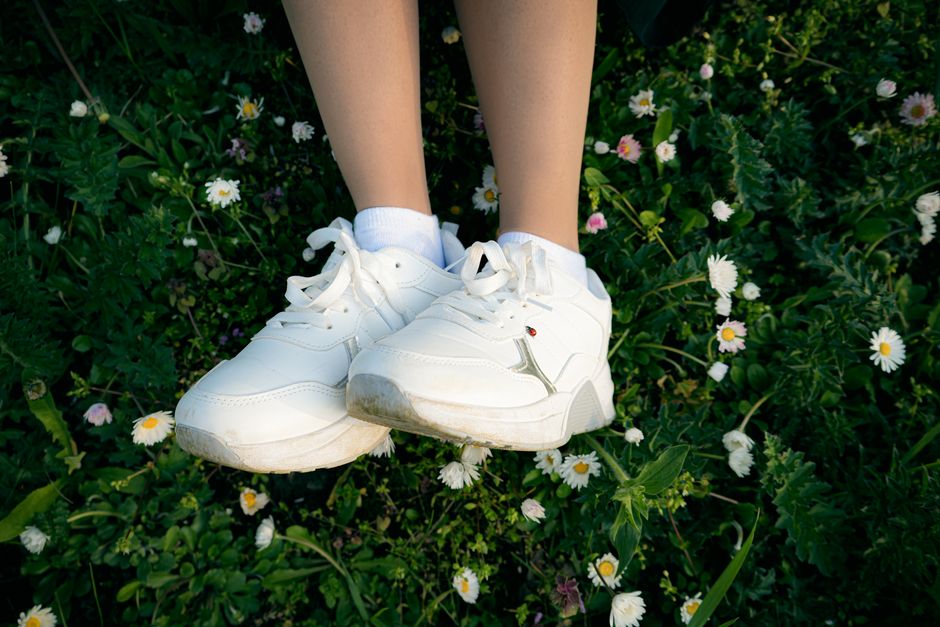
Buying tennis shoes online without trying them on leads to predictable problems. Here are the three most common fit failures I see, along with how to catch them before your first match.
Mistake 1: Buying Your Running Shoe Size
Tennis shoes fit differently. Your foot swells during lateral movement. You also wear thicker socks for court play. Most women need a half size larger in tennis shoes than in their everyday sneakers. Asics and K-Swiss run slightly narrow. Adidas and New Balance run wider. If your toes touch the front of the shoe when you lunge, the shoe is too small. You will lose toenails. That is not an exaggeration.
Mistake 2: Ignoring Heel Lock
A shoe that slips at the heel is worthless on court. When you push off, your foot slides forward inside the shoe, jamming your toes against the front. You need a firm heel counter — the plastic or synthetic cup inside the back of the shoe. Squeeze the heel of any shoe you consider. If it collapses flat with light pressure, walk away. The Asics Gel-Resolution 9 has one of the stiffest heel counters in the category. The NikeCourt Air Zoom Vapor Pro 2 is close behind.
Mistake 3: Prioritizing Cushioning Over Court Feel
Soft, pillowy shoes feel great in the store. On court, too much cushioning slows your reaction time and makes you feel disconnected from the surface. You want enough shock absorption to protect your joints, but enough ground feel to know where your foot is. The Adidas Adizero Ubersonic 4.1 strikes that balance better than most: low to the ground, responsive, but with enough foam to handle hard-court impact.
Hard Court vs. Clay: Your Outsole Choice Determines Durability
Not all tennis shoes work on all surfaces. The outsole compound and tread pattern change how long the shoe lasts and how well you grip. Buying the wrong outsole is the fastest way to waste $150.
| Surface | Outsole Type | What to Look For | Good Picks |
|---|---|---|---|
| Hard court | Modified herringbone, durable rubber | Thick, dense rubber; reinforced toe cap for dragging | Asics Gel-Resolution 9, K-Swiss Hypercourt Express 2 |
| Clay court | Full herringbone tread, softer rubber | Deep grooves to release clay; non-marking sole | Adidas Adizero Ubersonic 4.1 Clay, Babolat Jet Mach 3 Clay |
| Grass court | Nub or dimple pattern | Low-profile cleats or pimples for grip without damaging turf | NikeCourt Air Zoom Vapor Pro 2 Grass |
| Multi-surface | Mixed herringbone, medium durability | Balanced tread that works on hard and clay but excels at neither | K-Swiss Hypercourt Express 2 |
Hard courts eat outsoles. If you play three times a week on hard court, expect to replace your shoes every 4-6 months. A worn outsole means reduced traction and increased injury risk. The outsole wears smooth, especially under the big toe and ball of the foot. When you can no longer see the tread pattern in those zones, the shoe is done — even if the upper still looks new.
Five Tennis Shoes Worth Your Money in 2026
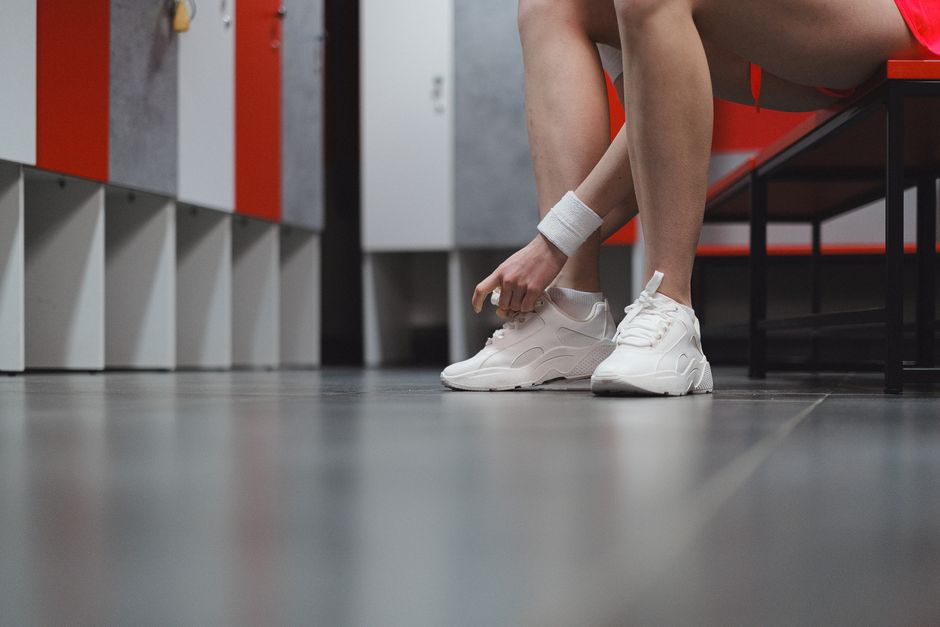
These are not generic recommendations. Each shoe solves a specific problem for a specific type of player. Prices are current as of early 2026 and will shift, but the relative value holds.
- Asics Gel-Resolution 9 ($150) — The durability pick. Best for hard-court players who drag toes and burn through shoes. Stiff heel counter, excellent lateral stability, and a six-month outsole warranty. Heavier than average, but worth it if you want a shoe that lasts.
- NikeCourt Air Zoom Vapor Pro 2 ($140) — The speed pick. Lightweight, low to the ground, responsive. Best for aggressive movers who want quick first steps. Durability suffers on hard courts, so budget for more frequent replacements.
- Adidas Adizero Ubersonic 4.1 ($130) — The balance pick. Good court feel without sacrificing comfort. Works for players who split time between hard and clay courts. Not the most cushioned, but the most versatile.
- K-Swiss Hypercourt Express 2 ($110) — The value pick. Wide toe box, comfortable out of the box, and solid durability for the price. Best for beginners and recreational players who want a reliable shoe without spending $150.
- Babolat Jet Mach 3 ($135) — The clay specialist. Soft, flexible, excellent grip on clay. Lightweight but less durable on hard courts. Buy this if you play primarily on clay.
For most women playing tennis two to three times a week on hard courts, the Asics Gel-Resolution 9 is the safest investment. It is not the lightest or the flashiest, but it protects your feet better than anything else in the category.
When You Should NOT Buy Tennis Shoes
Court shoes are not for everyone. Here are the situations where you should skip them entirely.
If you play pickleball more than tennis, buy pickleball-specific shoes instead. The movement patterns overlap, but pickleball shoes have different outsole compounds and often a slightly lower profile. Wearing tennis shoes for pickleball works, but dedicated pickleball shoes like the Skechers Viper Court Pro or the Tyrol Velocity are better tuned for the shorter court.
If you only play tennis once a month or less, a cross-trainer with good lateral support will work fine. The Nike Metcon series or the Reebok Nano line provide enough stability for casual play. Spending $150 on specialized tennis shoes for monthly doubles is overkill.
If you have wide feet, avoid the Asics Gel-Resolution 9 and the Nike Vapor Pro 2. Both run narrow. The K-Swiss Hypercourt Express 2 and the New Balance 996v6 offer genuinely wide toe boxes. Forcing a narrow shoe onto a wide foot causes blisters, bunions, and metatarsal pain.
Quick Comparison: Which Shoe Fits Your Game
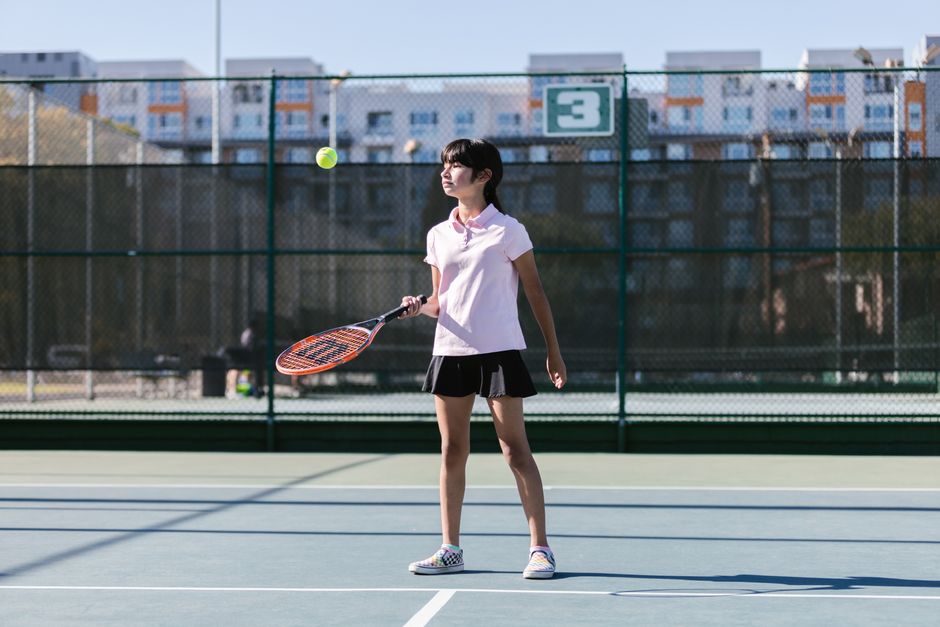
Here is the compressed verdict, because you should not need to reread 1,200 words to make a decision.
- Hard-court player who wants durability: Asics Gel-Resolution 9. Stiffest support, longest-lasting outsole, six-month warranty.
- Fast mover who wants speed: NikeCourt Air Zoom Vapor Pro 2. Lightest, most responsive, but expect faster wear.
- Clay-court specialist: Babolat Jet Mach 3. Best grip on clay, soft ride, poor hard-court durability.
- Beginner or recreational player: K-Swiss Hypercourt Express 2. Good fit, fair price, no break-in period.
- Multi-surface player: Adidas Adizero Ubersonic 4.1. Balanced performance on hard and clay courts.
One final note on sizing: order a half size up from your running shoe size. Wear the same socks you play in. Try shoes on in the afternoon — feet swell during the day. And if a shoe hurts in the store, it will hurt worse on court. No break-in period fixes a bad fit.