 By Kelvin Tshuma
You walk out of the thrift store with a vintage wool blazer that fits perfectly. Three days later, you notice tiny holes in a cashmere sweater hanging next to it. That sinking feeling hits you — you brought home more than just clothes.
Thrift store clothes bugs are a real problem. Moths, carpet beetles, and even bed bugs can hitch a ride in secondhand fabric. The good news is that most infestations are preventable, and with the right steps, almost all are treatable without trashing your finds.
Which Bugs Actually Live in Thrift Store Clothes?
Not every bug you find in a garment is a disaster. Some are just dead lint or random strays. But three species cause real damage and need immediate action.
Clothes Moths (Tineola bisselliella)
Adult clothes moths are small, golden-beige, and about 5-7mm long. They avoid light and fly weakly. You won’t see them often. What you will see are the larvae: cream-colored caterpillars that spin silken tubes and chew irregular holes in natural fibers — wool, cashmere, silk, fur. They cannot digest synthetics or cotton blends.
The damage looks like scattered, dime-sized holes, often with webbing or frass (tiny dark pellets) nearby. A single female moth lays 40-50 eggs in her 2-3 week adult lifespan. Left unchecked, that means 40-50 hungry larvae in a few days.
Carpet Beetles (Anthrenus verbasci)
Carpet beetle larvae look like tiny brown or black bristly caterpillars, about 4-5mm long. They eat the same natural fibers as moths — wool, silk, felt, even pet hair and dead insects. Adults are small, round beetles with mottled patterns and fly toward windows.
Signs include bare patches on fabric, shed larval skins (like tiny brown husks), and damage concentrated along collars, cuffs, and folds where dirt and sweat accumulate. Carpet beetles prefer soiled fabric over clean.
Bed Bugs (Cimex lectularius)
Bed bugs are the most feared. Adults are reddish-brown, flat, apple-seed-sized (4-5mm). They hide in seams, tags, and folds. You might find live bugs, shed skins, tiny blood spots, or a sweet musty odor.
Bed bugs don’t eat fabric — they bite humans. But they can survive up to a year without feeding, and their eggs are nearly invisible. Bringing home a single pregnant female can start an infestation in your bedroom within weeks.
How to Inspect a Thrift Store Find Before You Buy

You can catch most problems before the garment leaves the store. Spend 60 seconds doing this inspection.
First, hold the item up to natural light. Look for pinholes, thinning fabric, or irregular shiny patches — those are moth or beetle damage. Run your fingers along seams, cuffs, and underarm areas. Larvae and casings feel like tiny bumps or stiff grains of sand.
Turn the garment inside out. Check inside pockets, along zipper tapes, and around tags. Bed bugs hide in these tight spaces. Use your phone flashlight to examine dark folds.
Sniff the fabric. A musty or sweet, fermenting smell can indicate bed bugs. Moth infestations often smell like stale dust mixed with a faint chemical odor from pheromones.
Finally, give the item a sharp shake over a white surface. If tiny black specks (frass), shed skins, or live bugs fall out, put the item back.
What to Do Immediately After Bringing Thrift Store Clothes Home
Assume every thrift store item has something on it until proven otherwise. This one rule saves you from ever treating an infestation.
Isolate first. Do not toss thrift finds into your closet or laundry basket with other clothes. Keep them in a sealed plastic bag or a dedicated bin in the garage or bathroom until treated.
Heat is your best weapon. Most clothes bugs die at 120°F (49°C) for 30 minutes. Dry cleaning kills everything — eggs, larvae, adults. If you own a home dryer, run the item on high heat for 40 minutes. Check the care tag first. Silk, wool, and delicate synthetics can shrink or distort. For those, use a garment steamer instead — steam at 212°F for 5-10 minutes per side kills all life stages.
Freezing works if done right. Place the item in a sealed freezer bag and freeze at 0°F (-18°C) for at least 72 hours. This kills eggs and larvae, but some adult bed bugs survive if the temperature fluctuates. Freezing is less reliable than heat.
After heat or steam treatment, wash the item in hot water (140°F/60°C minimum) with a heavy-duty detergent. Line dry or tumble dry on high.
Treatment Options When You Already See Damage
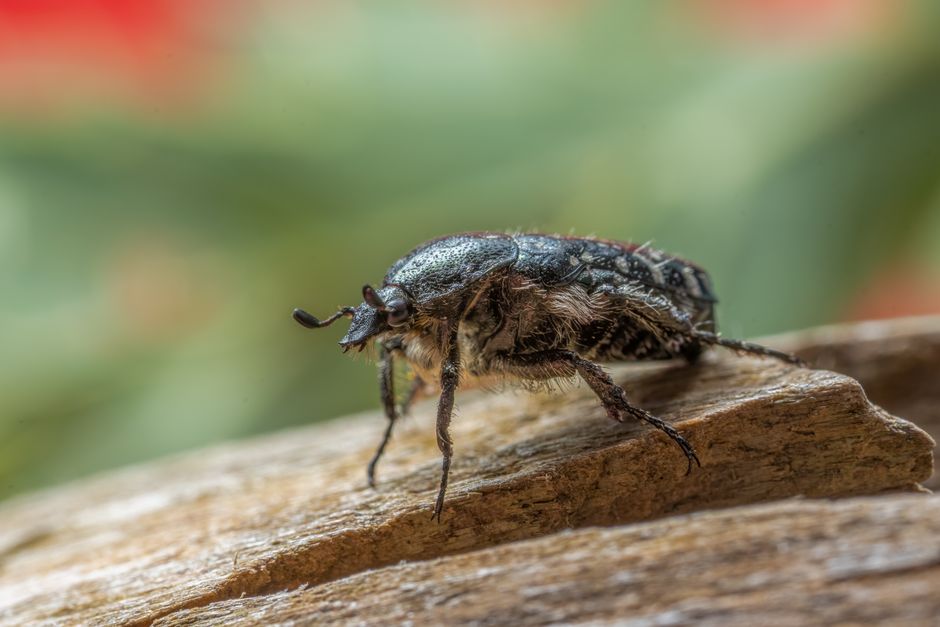
If you find holes, webbing, or live bugs after the item is already in your home, don’t panic. Most infestations are localized and treatable without throwing everything away.
For Moths and Carpet Beetles
Vacuum every surface — carpets, baseboards, closet corners, under furniture. Moth larvae and beetle larvae live in dark, undisturbed places. Dispose of the vacuum bag immediately outside.
Wash all affected clothing in hot water with a cup of white vinegar added to the rinse cycle. Vinegar disrupts the pH balance of eggs and kills larvae on contact. For dry-clean-only items, take them to a professional and tell them you suspect moth damage.
Use pheromone traps (like the classic Dr. Killigan’s moth traps) to monitor for adults. These sticky traps attract male moths and break the breeding cycle. Replace them every 3 months.
For severe infestations, consider a pyrethrin-based spray labeled for fabric use. Spray inside closets, along baseboards, and under furniture — never directly on clothing unless the label says it’s safe.
For Bed Bugs
Bed bugs require aggressive action. Heat treatment is the only reliable home method. Run the item through a dryer on high heat for 60 minutes minimum. If the item cannot handle heat, bag it and place it in direct sunlight for 4-6 hours on a 90°F+ day — but this is unreliable.
Wash with hot water (140°F) and dry on high. Use a bed bug-specific laundry additive like EcoRaider or Bed Bug Patrol. These contain enzymes that dissolve the bug’s waxy coating.
If you find bed bugs in your home, not just on the item, call a professional exterminator. DIY sprays rarely eliminate a full infestation. Expect to pay $300-$1,500 depending on severity and square footage.
How to Store Thrift Store Clothes to Prevent Future Bugs
Prevention is easier than treatment. Here’s how to store your thrifted treasures safely.
Use airtight containers for off-season storage. Plastic bins with rubber gaskets (like Sterilite or IRIS) keep bugs out. Cardboard boxes attract silverfish and carpet beetles — avoid them.
Add cedar blocks or lavender sachets. Cedar oil repels moths and beetles naturally, but it loses potency after 6-12 months. Sand the cedar surface lightly every year to refresh the scent. Lavender also works, but it’s less effective on bed bugs.
Vacuum your closet floor and baseboards monthly. Dust and pet hair attract carpet beetles. A clean closet is a boring closet for bugs.
Store wool, cashmere, and silk in garment bags made of cotton or polyester — not dry cleaner plastic bags. Plastic traps moisture and creates a breeding ground for mold and beetles.
Common Mistakes That Make Infestations Worse

These errors turn a small problem into a big one.
Mistake 1: Using mothballs incorrectly. Mothballs (naphthalene or paradichlorobenzene) are toxic fumigants. They work only in sealed containers. Placing them in an open closet does nothing except expose your family to carcinogenic fumes. Use them only for long-term storage in airtight bins, and keep them away from kids and pets.
Mistake 2: Washing in cold water. Cold water (under 80°F) does not kill eggs or larvae. Hot water (140°F or above) is required. If the care tag forbids hot water, use steam instead.
Mistake 3: Ignoring the source. If you find bugs on one item, assume they are in the surrounding area. Check every piece of clothing within 3 feet of the infested item. Vacuum the entire closet, including the floor and walls. One missed egg can restart the cycle.
Mistake 4: Delaying treatment. A single pair of moth larvae can destroy a $200 cashmere sweater in three weeks. The faster you act, the less damage you’ll see.
When to Keep the Item and When to Throw It Away
Not every thrift find is worth saving.
| Situation | Keep or Toss? | Why |
|---|---|---|
| Small holes (1-3) in a $10 sweater | Keep | Darning or visible mending fixes them. A $3 needle and thread saves the sweater. |
| Extensive holes or thinning across the whole garment | Toss | Fabric integrity is gone. Even dry cleaning won’t restore it. Cut it up for cleaning rags. |
| Live bed bugs found on the item | Toss | Risk of home infestation is too high. Seal it in a plastic bag and discard immediately. |
| Moth webbing or larvae in seams | Keep (treatable) | Heat treatment kills all stages. Wash and dry on high heat. Damage is cosmetic only. |
| Fabric is stained with unknown residue | Keep (test first) | Stain could be food, sweat, or bug frass. Wash with enzyme detergent. If stain remains, toss. |
| Item has been in your home for 2+ weeks with no signs | Keep | If you inspected and treated it properly, it’s safe. |
The rule: if the item costs less than $20 and shows any sign of live bugs, toss it. Your peace of mind is worth more than the sweater.
Bottom Line on Thrift Store Clothes Bugs
That vintage blazer you found is still a good buy — as long as you treat it before it touches your closet. Heat, steam, and isolation are your three tools. Use them every time, and you’ll never deal with a real infestation.
The real cost of thrifting isn’t the price tag. It’s the 40 minutes you spend steaming and washing each find. That time is cheap insurance against a $500 exterminator bill or a ruined wardrobe.